
Charlevoix County Criminal Court Cases
Charlevoix County criminal court cases do not all stay in one file. The 90th District Court hears misdemeanors and handles every felony complaint at its first stages, including arraignment and the preliminary examination. The 33rd Circuit Court takes a felony after bindover and holds the trial, plea, disposition, and sentence record. Both courts operate from 203 Antrim Street in Charlevoix, but each has its own case role. Juvenile delinquency matters belong to the Probate/Family Division and are subject to tighter access limits.
The County Clerk serves as clerk of the 33rd Circuit Court. Filed court documents, not the police report or statewide history summary, make up the official case file. The official 33rd Circuit Court page describes that felony jurisdiction.
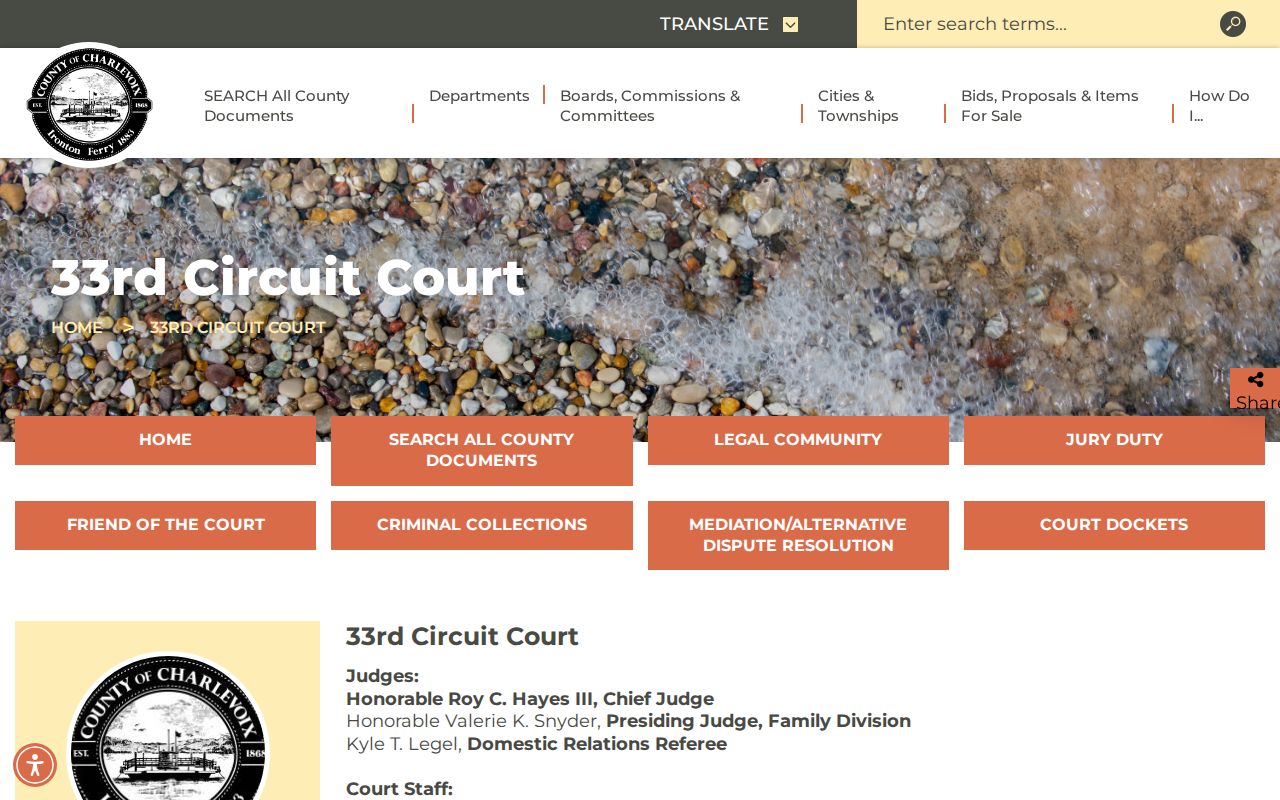
The court page identifies the local destination for felony proceedings after the District Court completes the preliminary phase.
Charlevoix County Felony Court Path
A Charlevoix County felony can produce two related case numbers. The 90th District Court opens the complaint and handles the first appearance, bond, probable-cause conference, and preliminary examination or waiver. If the judge finds probable cause, or the defendant waives that hearing, the case is bound over. The prosecutor then files an information in the 33rd Circuit Court. “Information” means the felony charging document used at that level. The Circuit Court file can link back to the lower-court matter, but readers should not assume one search returns both.
Misdemeanors follow a shorter route and generally remain in District Court through disposition and sentence. The 90th District Court page supplies the criminal division contact and describes its local role.
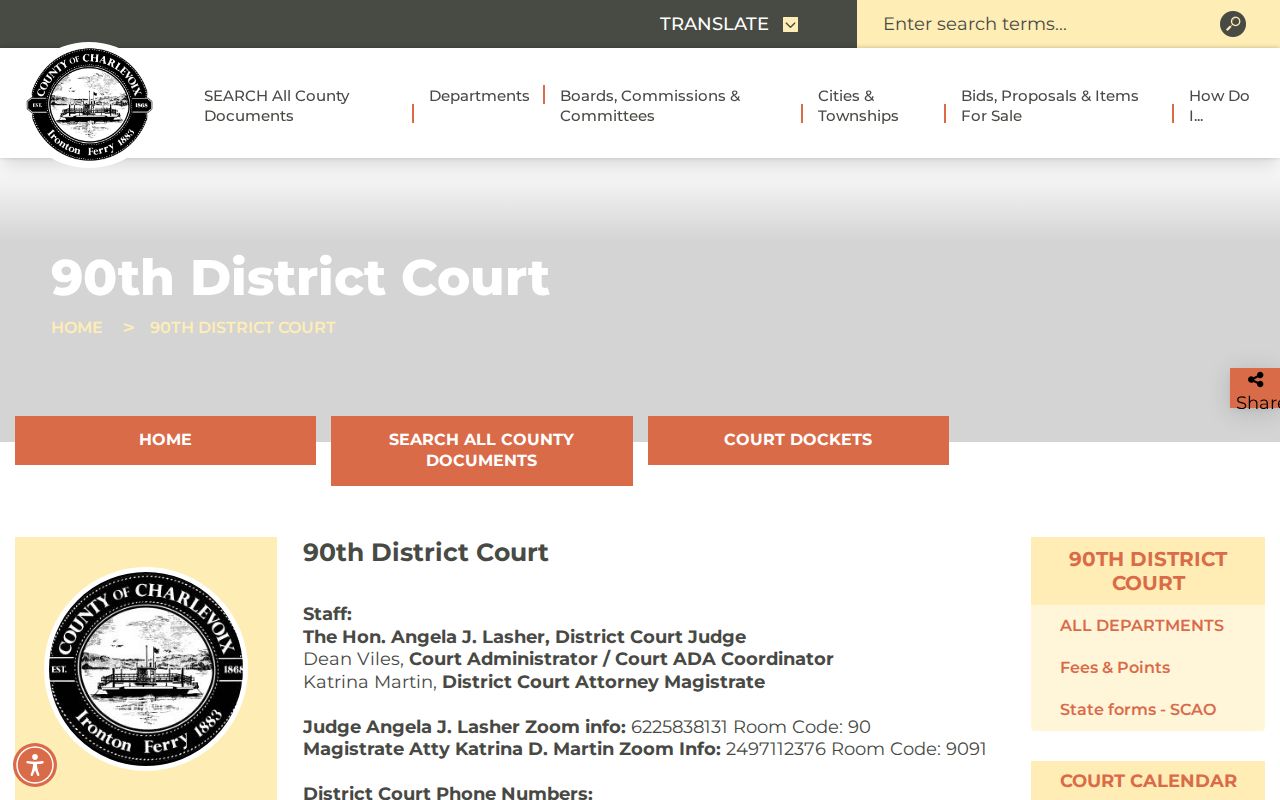
This local division is the front door for misdemeanor files and for the preliminary part of every Charlevoix County felony case.
Searching Charlevoix County Case Records
Start with MiCOURT Case Search and select the participating court that could own the case. Coverage varies, and MiCOURT warns that its index is not the official record. A missing result can reflect the wrong court, a new filing, an old or archived file, a name variation, a protected matter, or a felony that moved between court levels. The county also publishes a Circuit Court docket page. The clerk is the final source for a certified disposition, a document that the portal does not display, or a record that is not indexed online.
- Choose the 90th District Court for a misdemeanor or felony preliminary file, and the 33rd Circuit Court for a felony after bindover.
- Search with the full name or case number. Try a careful name variation if spelling may differ.
- Match the court, case type, filing date, and charge details before treating a result as the right file.
- Read events in date order, including hearings, charge changes, pleas, disposition, and sentence.
- Contact the proper clerk for certified copies, missing documents, or an archived Charlevoix County criminal court case.
| MiCOURT Field | Use | Search Note |
|---|---|---|
| Court | Select a participating trial court | Check District and Circuit when a felony moved |
| Case number | Direct case search | Use the number tied to that court level |
| Party name | Name-based search | Confirm the match from docket context |
| Case type | Narrow results | Distinguish criminal from other files |
| Filing year | Limit a broad name search | Use an approximate year for older matters |
The official MiCOURT interface shows how participating-court searches are organized.
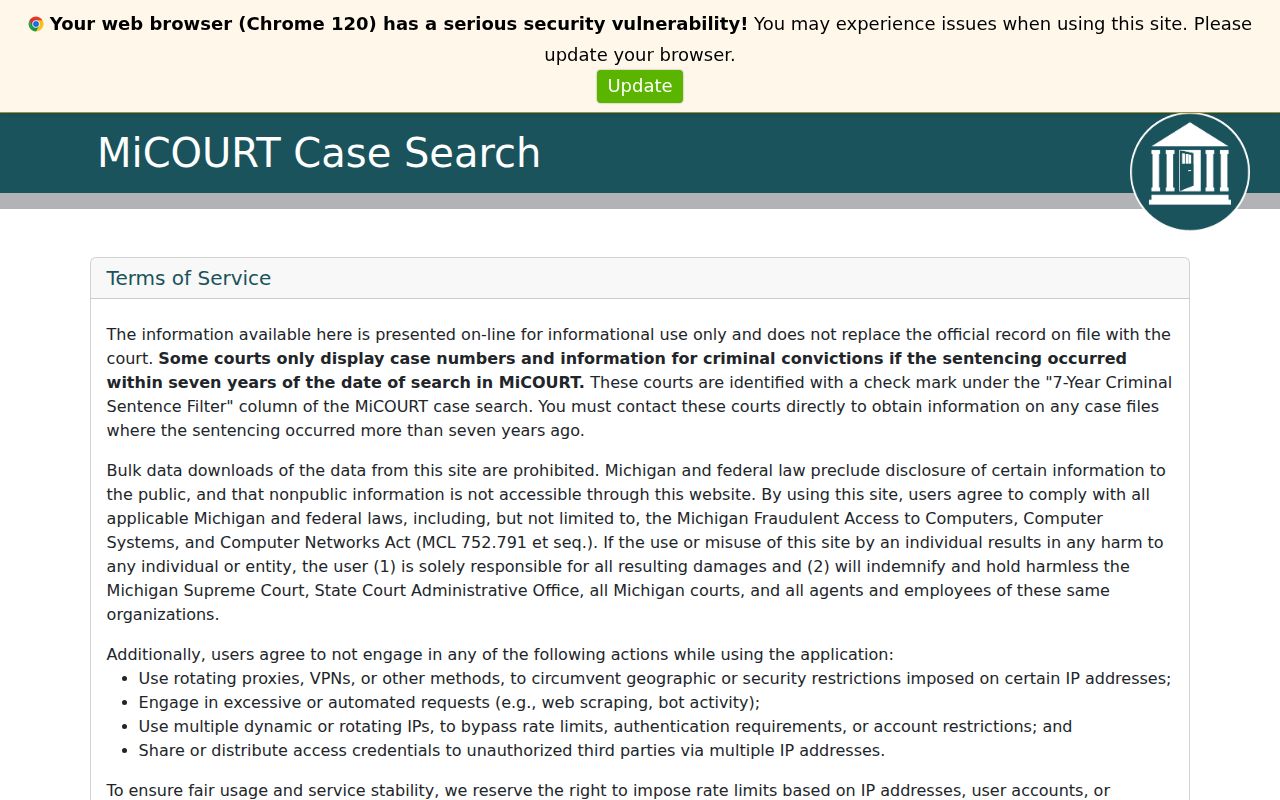
Its court filter matters in Charlevoix County because a felony may have a District Court phase and a later Circuit Court file.
Charlevoix County Docket Limits
The county’s docket publication is useful for scheduled proceedings, yet it is not a substitute for every document in a Charlevoix County criminal court case. A docket line can show an event, date, or status without displaying the complaint, motion, signed order, or judgment behind it. The online view may also omit protected identifiers, victim information, sealed documents, and material restricted by court order. PDF availability varies.
The Charlevoix County Circuit Court docket page is the direct county channel for published docket access.
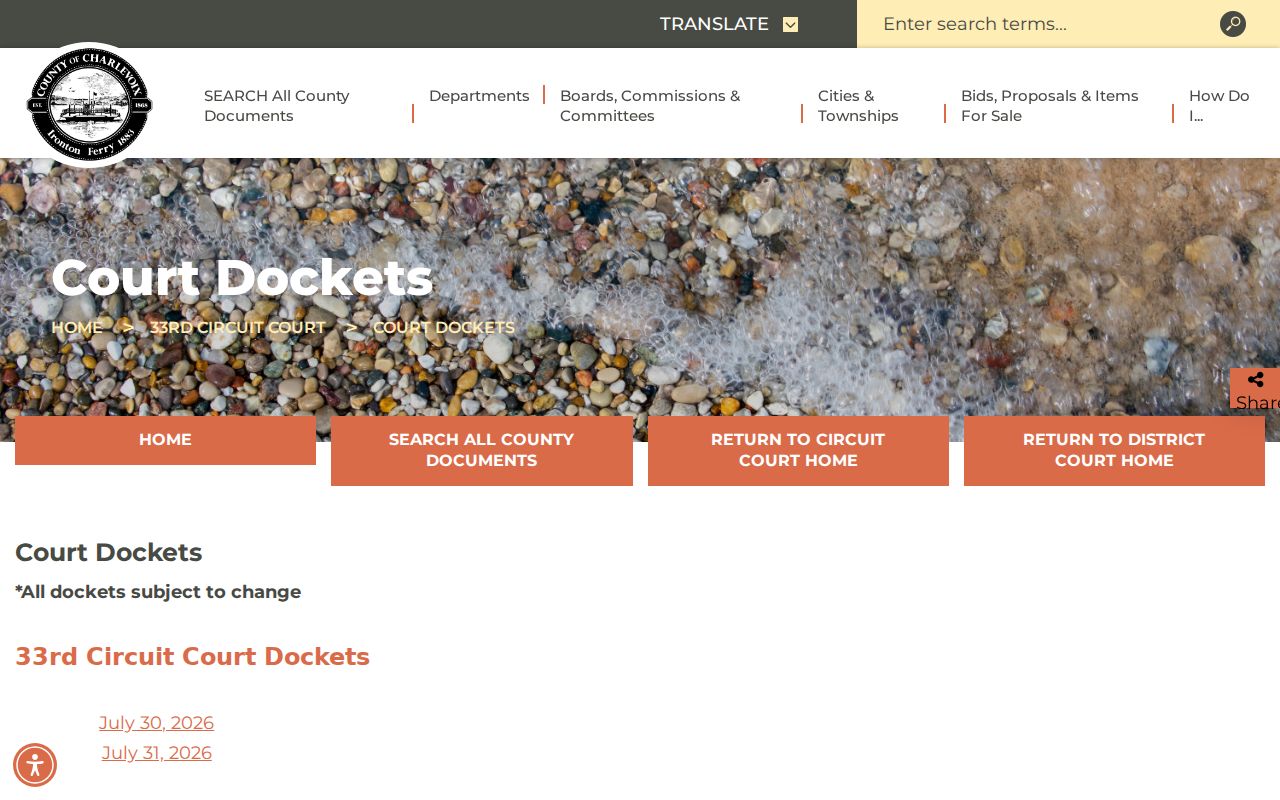
Use the published schedule as a lead, then confirm the full entry and any requested document with the Circuit Clerk.
Inside a Charlevoix County Case File
A case file is centered on one prosecution. It can show how allegations changed after the arrest, what the prosecutor filed, which hearings occurred, and how each count ended. The docket may display the defendant’s name, judge, attorneys, case type, filing date, charge description, statute, count, offense date, hearing schedule, public bond terms, disposition, sentence, and financial entries. Protected dates of birth, Social Security numbers, victim or minor names, and sealed documents are absent or redacted.
| Case and court number | Identifies the specific District or Circuit Court file and may link a lower-court matter. |
|---|---|
| Charging document | Shows the complaint in District Court or the information filed after a felony bindover. |
| Docket events | Lists filed acts, motions, hearings, plea events, and orders in sequence. |
| Charge details | Shows each count, offense description, statute, and felony or misdemeanor label. |
| Disposition | Records whether a count was convicted, dismissed, acquitted, or otherwise resolved. |
| Sentence | May show jail, prison, probation, fines, costs, restitution, and other public terms. |
For a result that must be proved, ask the clerk for the judgment or certified disposition rather than relying on a brief event label. A police narrative and an ICHAT entry answer different questions. The first describes an investigation; the second assembles public reportable Michigan history.
Charlevoix County Court File Terms
Short docket terms can change the meaning of a Charlevoix County criminal case. They describe procedure, not always guilt. A bindover only moves a felony forward. Dismissal ends a count without a conviction, while acquittal is a not-guilty result. A plea agreement is a proposed negotiated resolution that remains subject to court action.
- Arraignment
- A hearing where charges and rights are stated and a plea may be taken.
- Preliminary examination
- A District Court hearing on whether probable cause supports sending a felony to Circuit Court.
- Bindover
- The transfer of a felony from District Court to Circuit Court.
- Disposition
- The final result entered for a charge.
- Sentence
- The punishment and conditions imposed after conviction.
Michigan’s court-approved forms can help identify the right filing. The State Court Administrative Office form finder is the official search source.
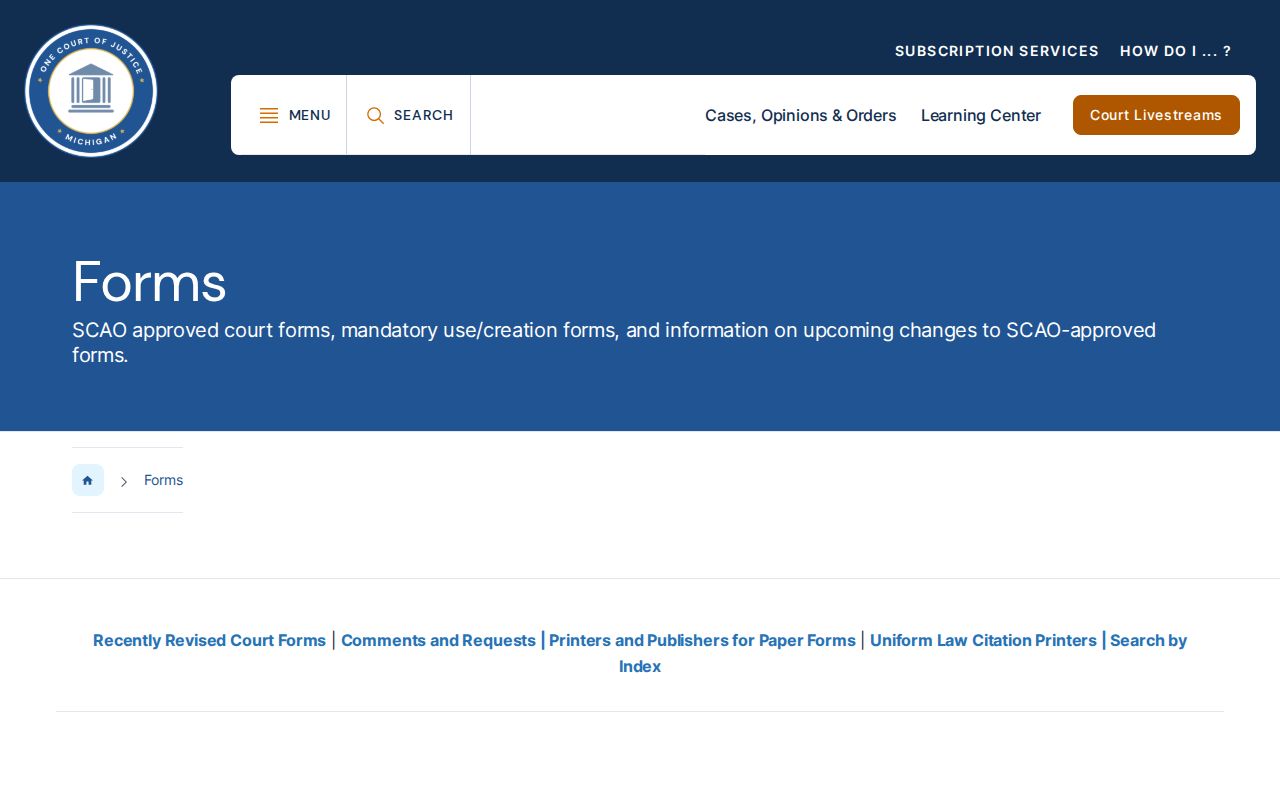
The form finder supports a clerk request or postjudgment filing, but it does not replace the signed order kept in the Charlevoix County court file.
How a Criminal Case Moves
Most local files move through a known set of events, though a misdemeanor stays in District Court and a felony can cross into Circuit Court. A dismissal may occur before trial. A plea may avoid trial. Appeals and postjudgment requests can add later entries. No stage by itself should be read beyond what the signed record says.
Case flow: Charges Filed › Arraignment › Pretrial › Plea or Trial › Disposition › Sentencing
In a felony, the Charlevoix County process also includes a probable-cause conference and preliminary examination or waiver before bindover. Circuit arraignment follows after the information is filed. A misdemeanor usually proceeds from District Court arraignment through pretrial, plea or trial, disposition, and sentence without a Circuit Court transfer.
Certified Charlevoix County Dispositions
Older Charlevoix County criminal court cases may be on paper, microfilm, or in off-site storage. Give the clerk the full name, approximate filing year, court level, and any known case number. Ask whether archive retrieval adds time. Copy fees were not reliably posted in the official material, so confirm the price for a plain copy, a certified copy, accepted payment, and turnaround before ordering. Do not route an adjudicative court file through ordinary county FOIA. Michigan Court Rule 8.119 and the clerk’s process govern access to the official court record.
A certified disposition is often the best proof of how a charge ended. If an ICHAT entry lacks that outcome, obtain the certified court result first and use the Michigan State Police correction channel for review of your own history. The broader Charlevoix County arrest lookup explains why the initial booking charge may differ from the later court result.
Case Record Access & Restrictions
Michigan Court Rule 8.119 makes court records presumptively open, subject to a statute, court rule, or court order. That does not expose every page. Juvenile files, sealed or set-aside matters, victim and minor identities, personal identifiers, and protected documents can be nonpublic or redacted. Online access can be narrower than clerk access, and clerk access can still exclude material the law protects. Michigan FOIA does not override a court restriction.
Charlevoix County is within the federal Western District of Michigan, but a federal criminal case does not live in the 90th District or 33rd Circuit file. The PACER federal court-record portal is the official search channel for federal dockets.
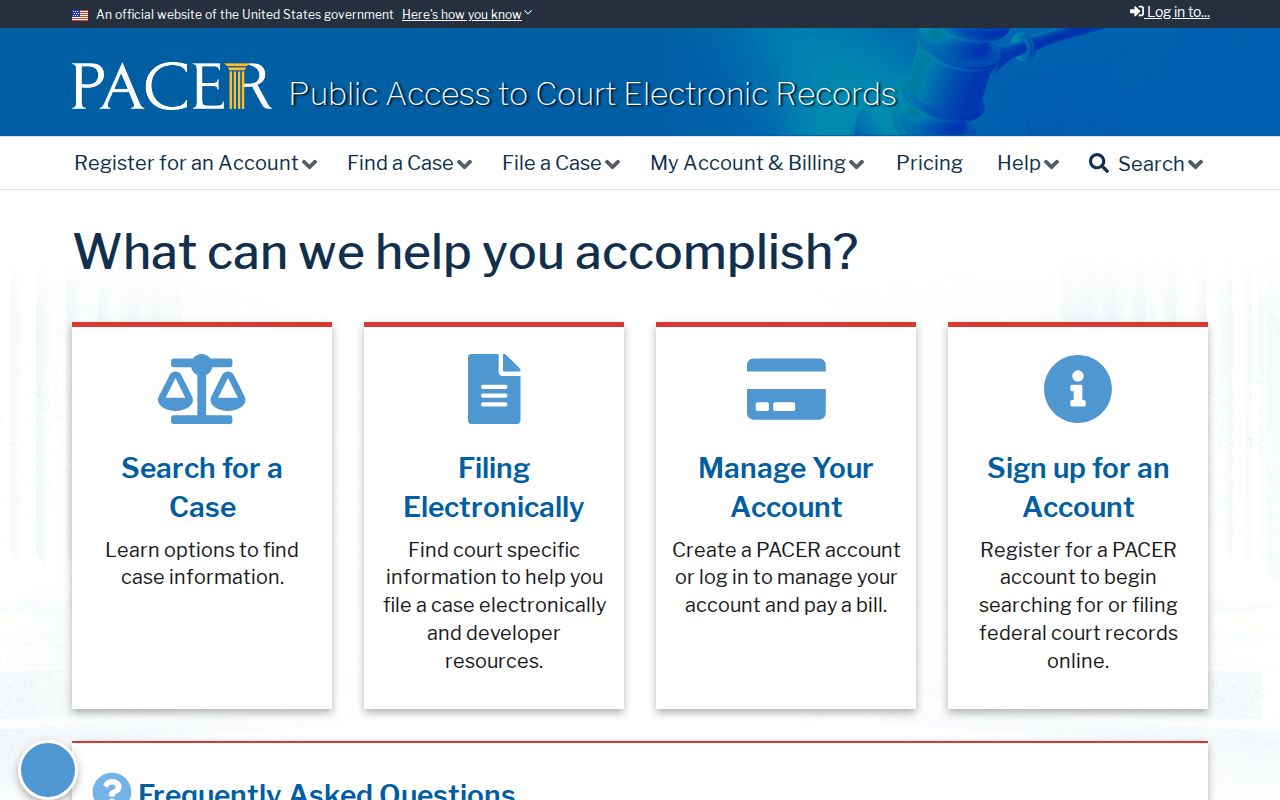
PACER separates federal filings from the local Michigan trial-court records discussed throughout a Charlevoix County case search.
Charlevoix County Court Contacts
Both local court counters are at 203 Antrim Street, Charlevoix, Michigan 49720. Call the 90th District Court criminal division at 231-547-7227 for misdemeanor files and felony preliminary proceedings. The County Clerk can be reached at 231-547-7200 for Circuit Court record routing. Confirm the current Circuit division number through the county directory before a visit. Court pages also link language-access resources, disability accommodations, and Michigan-approved forms.
90th District Court
203 Antrim Street
Charlevoix, MI 49720
231-547-7227
33rd Circuit Court Clerk
203 Antrim Street
Charlevoix, MI 49720
231-547-7200
Call first when a file is old, a certified copy is needed, or an accommodation must be arranged. That step helps the clerk identify the correct court and storage location.